Running
Vigia
the fire watch
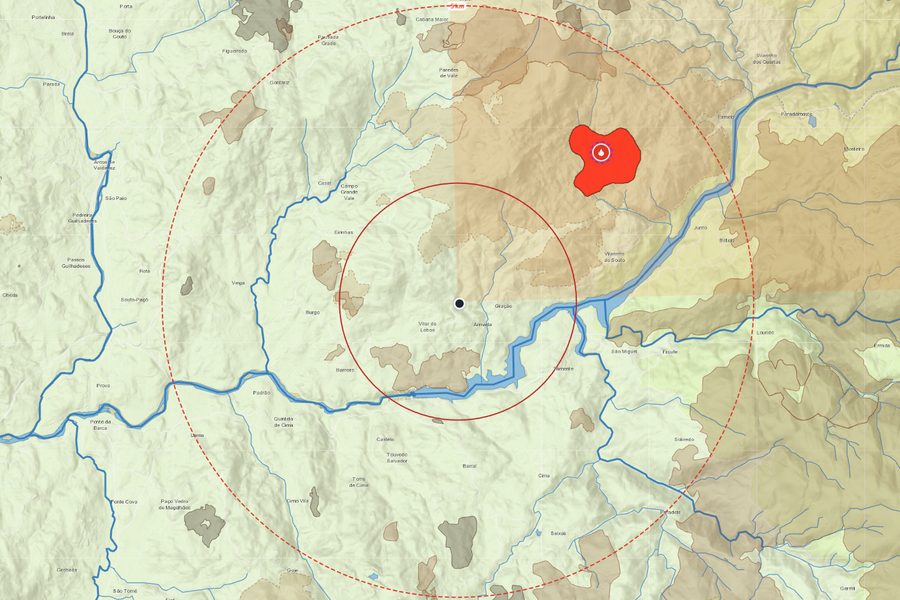
Official fire risk, live incidents and satellite heat, gathered into one early warning for the valley.
Read more2026
Lab
A place to tinker, in dialogue with the land.
Everything on this land was designed here and built by hand, from what the valley offers and what we could salvage. This is where we keep the record of it: the buildings, the planting, the art, and the small instruments that help us look after it all.
Each project has its own page with the method, the materials and, where there is code, a link to it. All of it is open, so another small project can borrow what works.
We keep records over years with fixed methods, log every change, and open the data to anyone who wants to check it. Pouco a pouco, the records show whether the regeneration is working.
We welcome ecologists to review our methods, funders to help grow these tools into a regional network, and neighbours who would like an instrument of their own.
Solar-powered, home-built and open source. They watch for fire and track water and sunlight. The data stays on the land, and the instruments keep working when the satellite internet sleeps.
the fire watch
Official fire risk, live incidents and satellite heat, gathered into one early warning for the valley.
the land at a glance
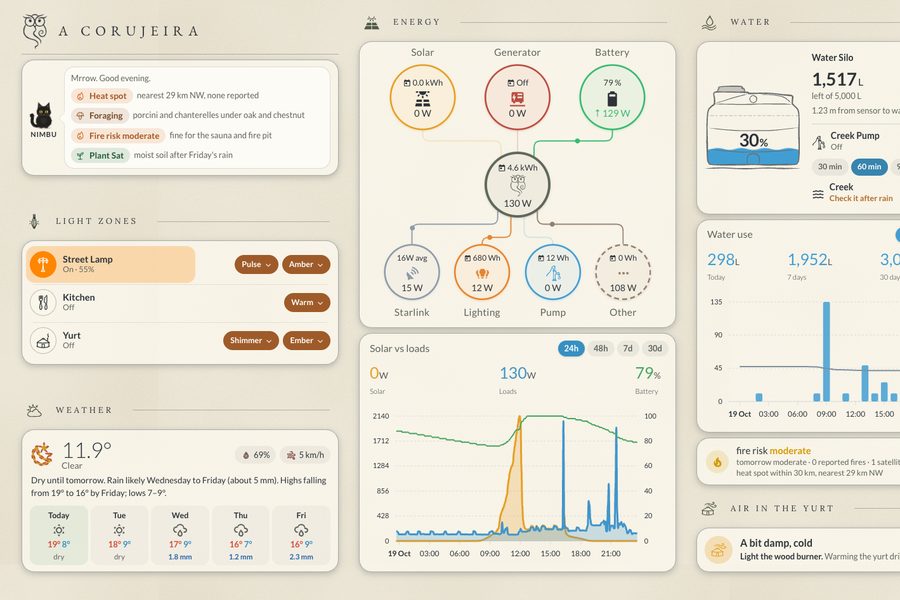
The kitchen tablet: the silo's level, the sun and batteries, the air in the yurt, and a land avatar who turns it all into plain advice.
a conversation with the garden
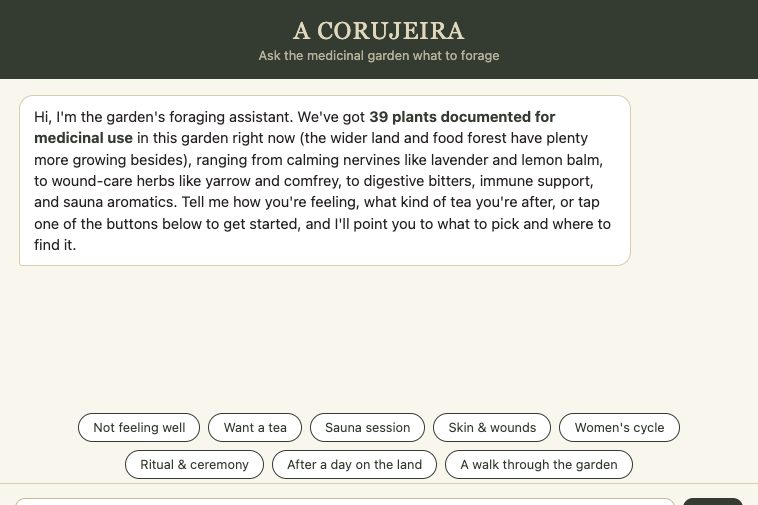
A guide to the 39 herbs of the medicinal garden, drawn from a trusted canon of traditional Western herbalism.
every plant, to the centimetre
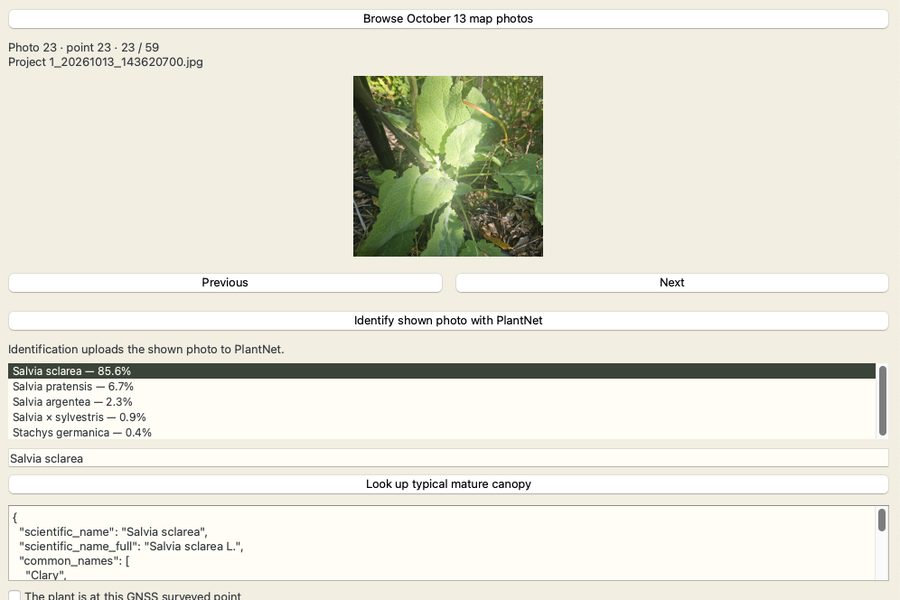
Each plant on the land is located with GNSS to the centimetre, photographed in place, and identified in bulk through a PlantNet plugin for QGIS that will soon be open source.
Small structures of timber, clay, stone and reclaimed material, each one a lesson in building with the place.
the owl by the waterfall
An eight-person wood-fired sauna in Japanese cedar, modelled in Rhino, prefabricated over months, and shaped like an owl.
a woodshed turned to clay
A solar woodshed reborn as a tiny house of clay, built across three summer sessions that doubled as open natural-building workshops.
the makerspace
A sheltered bench with power tools, built in 2025 to give every other project a place to start.
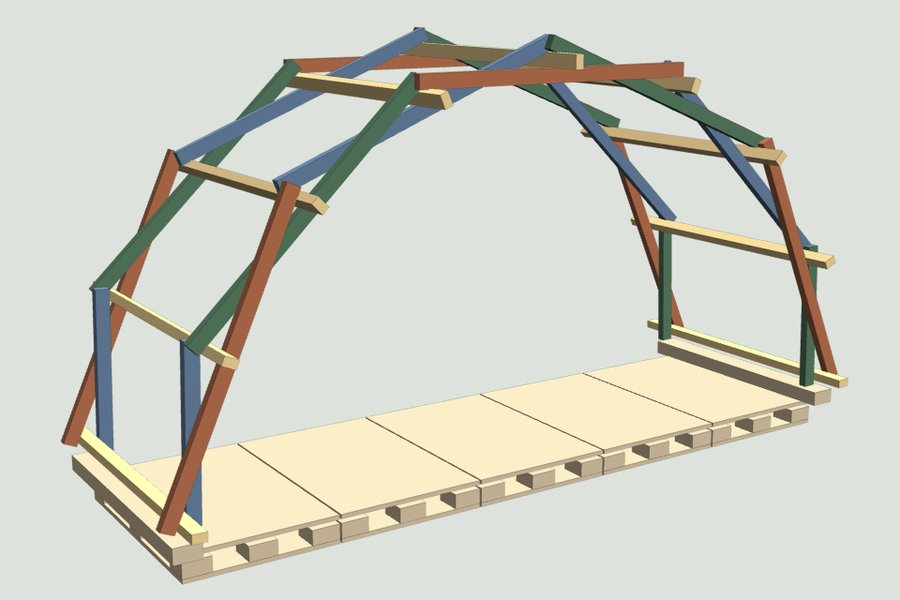
a reciprocal arch for firewood
A self-supporting reciprocal arch after Leonardo, woven from cryptomeria boards ripped into strips and raised on five Euro pallets. Its geometry was programmed before the first cut.
The slow work of recovery after fire: replacing eucalyptus with a diverse, fire-resistant food forest, and planting medicine on the terraces.
the young food forest
Seventy eucalyptus felled on contour beneath the power line, and more than 200 trees, shrubs and cuttings planted in their place.
terraces above the creek
Terraces above the creek planted with more than twenty species of medicinal herbs,.
Sculpture, light and living structures, made with other artists and makers.
a living portal
A metal trellis sculpture at the way into the land, planted this autumn with a grapevine that should cover it by next year, in homage to the land's history.
By Jannis
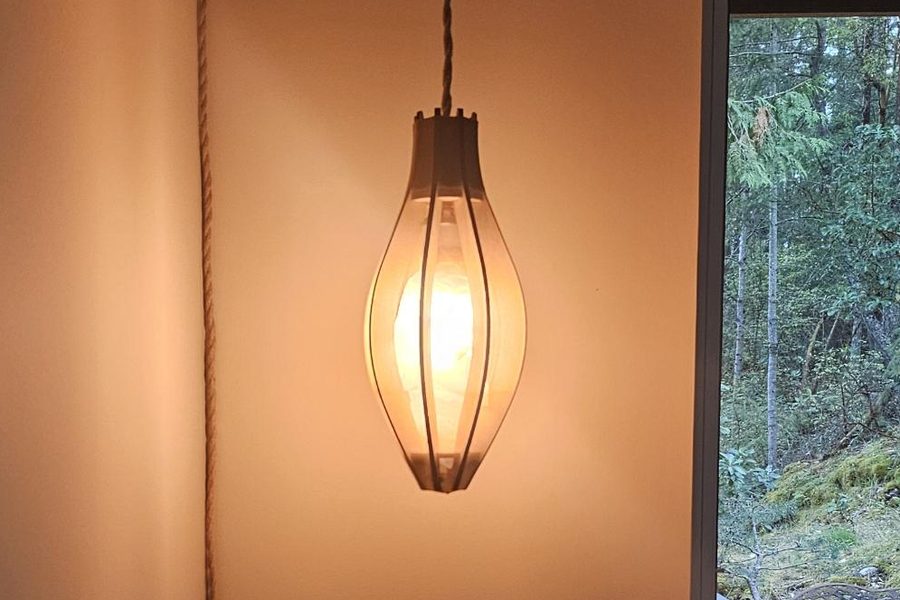
a fire that listens
Seventeen half-lap plywood lamps, sketched by hand, modelled in Rhino and laser-cut, now growing into programmable fire lanterns of 266 LEDs that respond to music.
Design Eska · Mechatronics Anca
Some of the work here is made together with other artists and makers. These are the collaborators whose work lives on the land.
Metalwork
The trellis
Mechatronics
Lanterns
Instruments and tools
the fire watch
A fire lookout for a remote valley, bringing official fire risk, live incidents and satellite heat into one early warning.
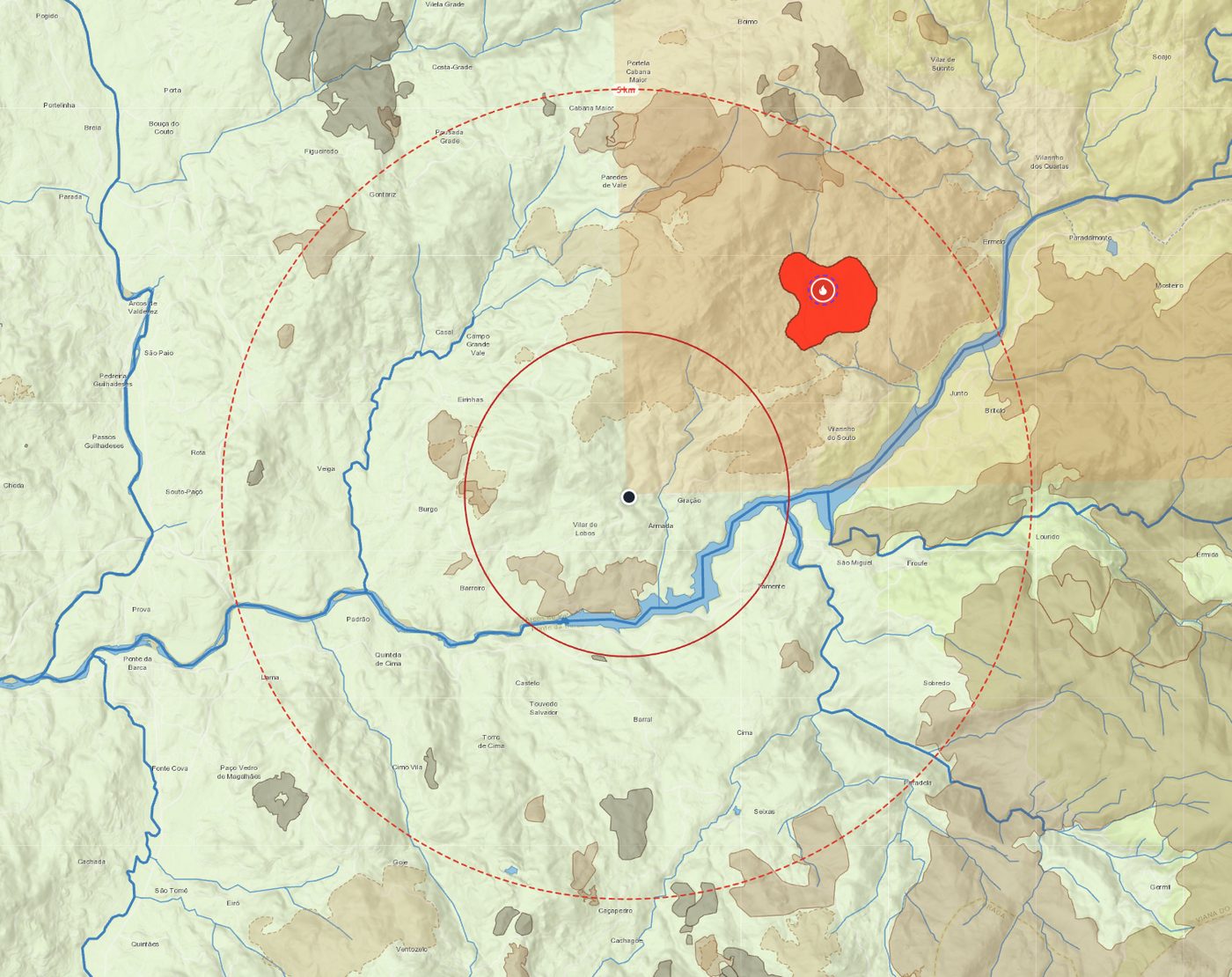
Vigia is Portuguese for a fire lookout.
About two decades ago a fire burned through this valley, carried by the eucalyptus plantations that still cover much of the Minho. In the summer of 2025 we watched the Gerês range burn from the hill above the yurt, ridge after ridge lit orange in the dark. Fire season here is part of the year, and living with it well means knowing early.
The information already exists, scattered across several places. IPMA publishes the daily fire risk for each concelho. Civil protection reports incidents to Fogos.pt. NASA's satellites pick up heat from orbit. The wind decides where any of it goes. Checking all of that on a phone, over a satellite connection, in the middle of the night, is how warnings get missed.
Vigia gathers these sources in one place on the land and speaks up only when a fire is close or heading our way.
A fire tile on the kitchen dashboard shows today's and tomorrow's fire risk on a five-step meter, any weather warning, how many fires are nearby, and plain advice when the risk is high.
A fire map covers 30 km around the land. Satellite heat is drawn as fire footprints, each one bright at the newest front and fading over 48 hours, like growth rings. Incidents appear with their status, alongside this season's burnt areas, the creeks of the valley, wind arrows, and the upwind sector shaded.
Alerts come in three tiers, each adjustable.
Any fire within 2 km, whatever the wind.
Urgent: breaks Do Not Disturb and flashes the lamp-post lights.
Within 5 km, with the wind blowing from the fire toward the land.
Urgent: breaks Do Not Disturb and flashes the lamp-post lights.
Within 15 km upwind, with wind of 20 km/h or more.
A normal notification.
Each fire alerts once, and again only if it moves up a tier or comes more than 1 km closer. Satellite detections older than 12 hours never raise a new alert.
Vigia is an open-source integration for Home Assistant, the platform that already runs the land's off-grid systems. Home Assistant fetches each source on its own schedule and keeps the results on site, so the tile, map and alerts carry on from the last data if the internet drops.
| Source | Gives | Refresh |
|---|---|---|
| IPMA | Fire risk today and tomorrow for the concelho; weather warnings for the district | 60 min · 15 min |
| Fogos.pt | Active incidents reported by civil protection (ANEPC), often faster than satellites | 5 to 15 min |
| NASA FIRMS | VIIRS satellite hotspots, up to about 3 hours behind | 10 min |
| EFFIS | This season's burnt areas, © Copernicus | 6 h |
| Open-Meteo | Wind across the map | 30 min |
| OpenStreetMap | Rivers, creeks and lakes | 30 days |
| The land's weather | Wind at home, for the alert rules | live |
A satellite hotspot can also be a sunlit roof or a farmer's burn, so satellite alerts say "heat detected" and point to Fogos.pt to check.
Vigia is a helper. Official advice from ANEPC and local civil protection always comes first.
Vigia suits anyone in Portugal running Home Assistant. Fire risk, warnings and incidents are Portugal-only for now; satellite heat, burnt areas and wind work anywhere.
Buildings
a reciprocal arch for firewood
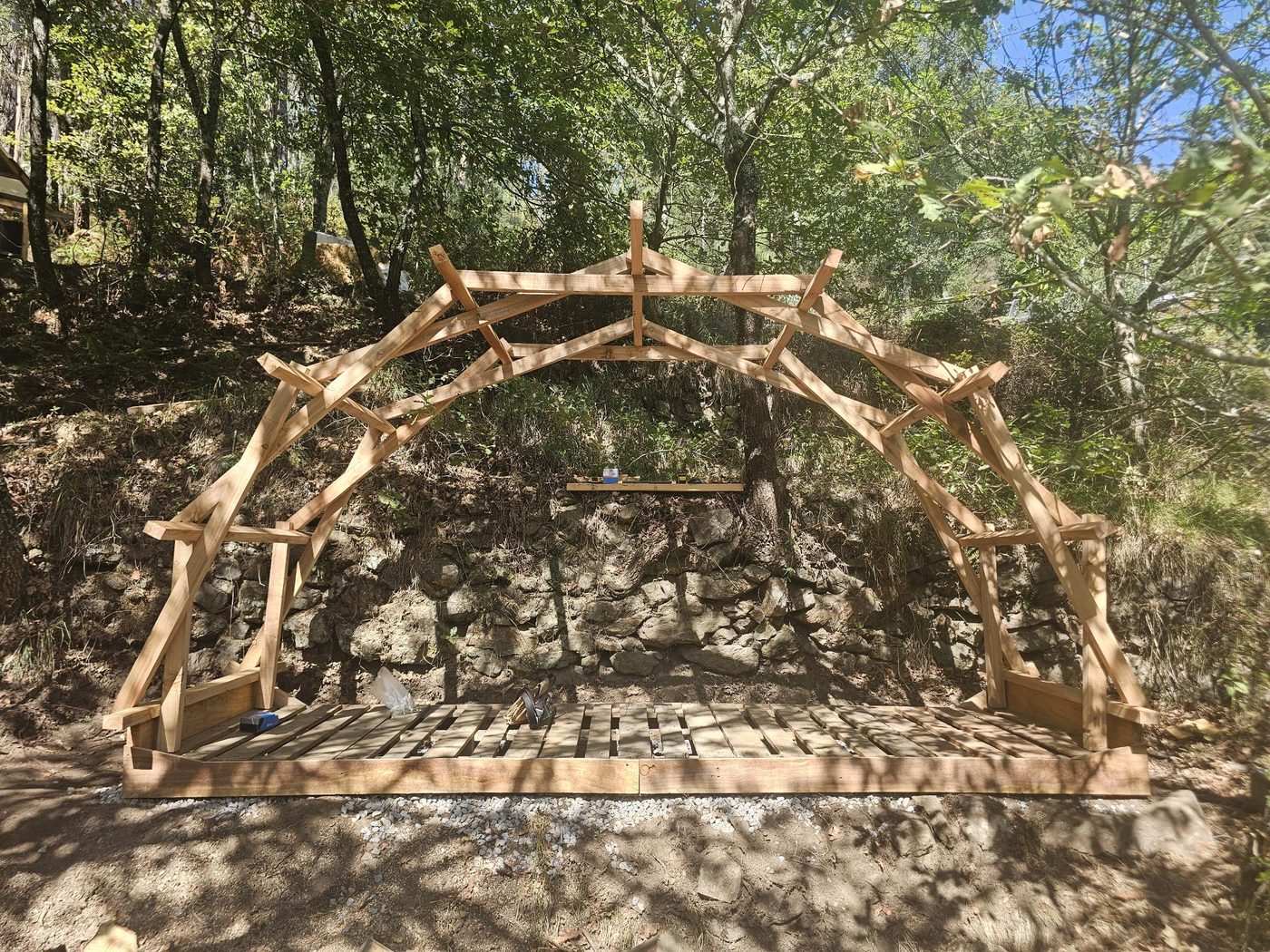
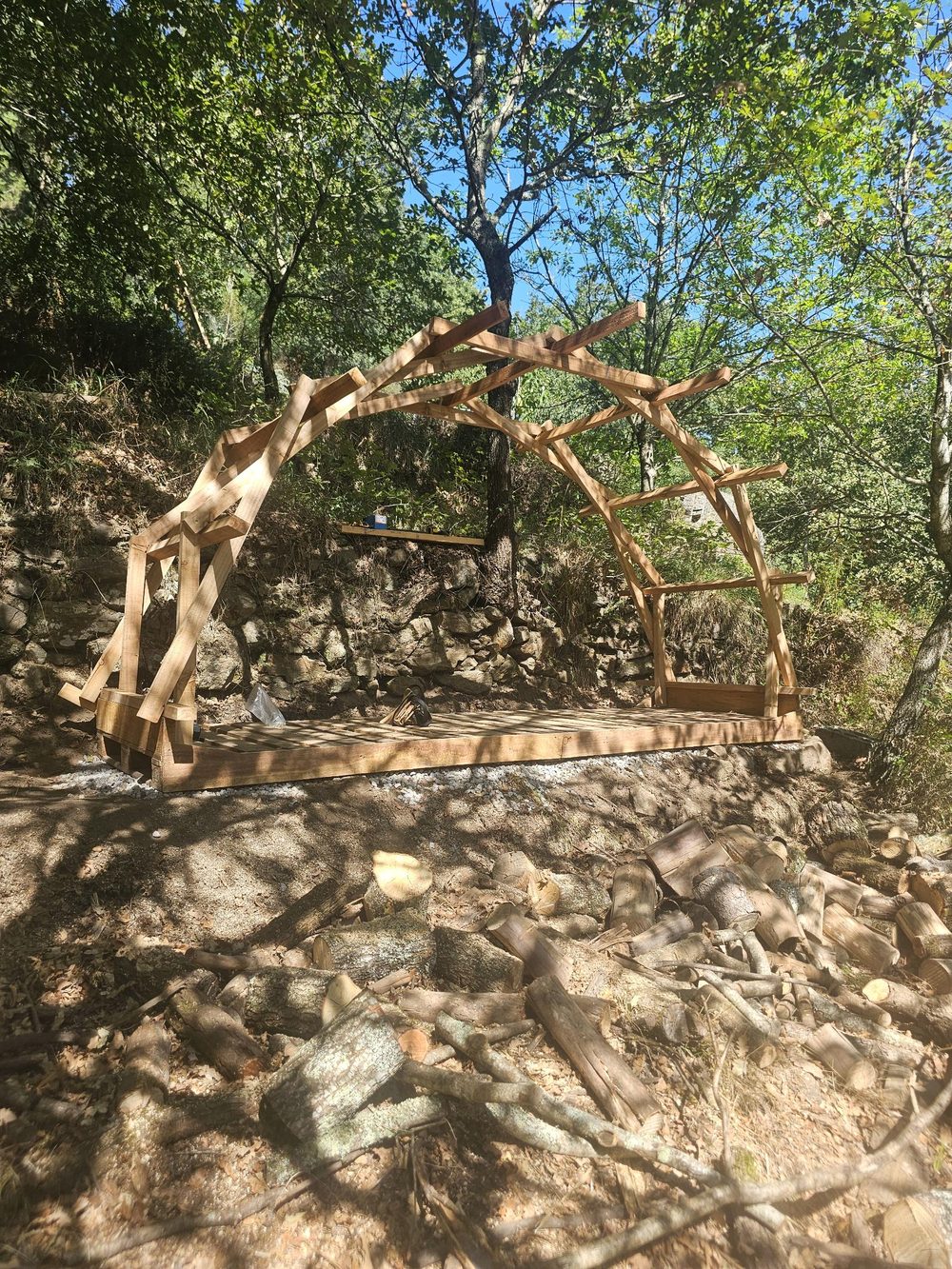
A self-supporting arch after Leonardo, woven from short cryptomeria strips and raised on five Euro pallets to keep the firewood dry.
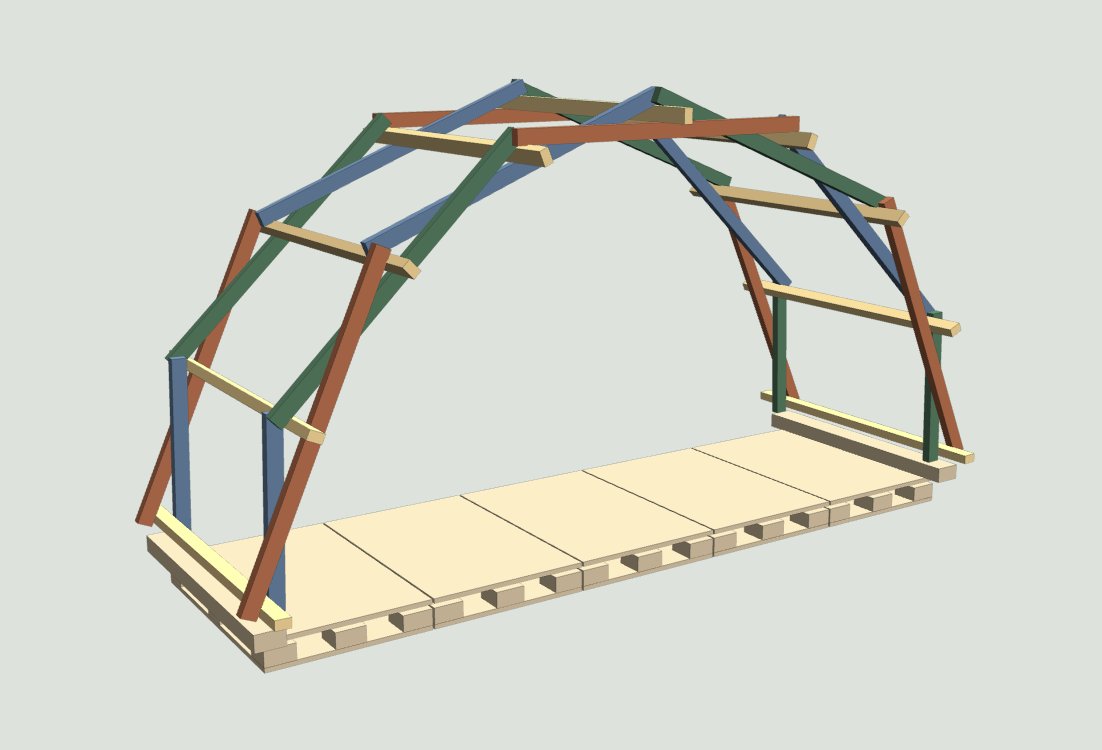
The sauna and the yurt's wood burner run on firewood, and firewood seasons best somewhere dry with air moving through it. The woodshed gives it that, on a deck of pallets that keeps the stack off the ground.
Leonardo da Vinci sketched bridges made of short, straight timbers that lock together under their own weight. The same idea, now called a reciprocal frame, makes a strong arch from the kind of short stock a small workshop can cut and carry.
Each frame of the arch is built from short bars. Every bar rests on its neighbour and carries the next, so the load travels round the arch through a woven pattern of supports. Eight sections make the curve.
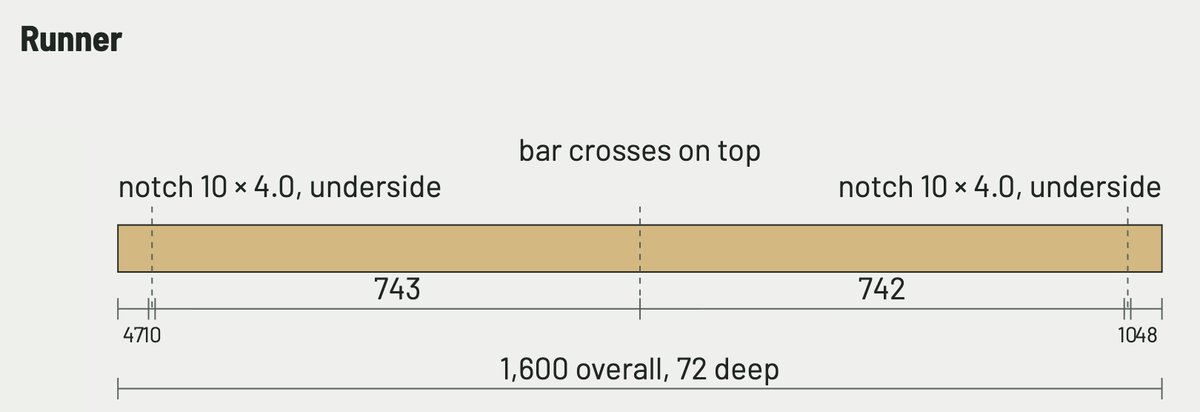
Runners laid across the frames tie them together along the depth of the shed. Each runner has a small notch cut under each end, 10 mm wide and 4 mm deep, which catches the edge of the bar it sits on and stops it sliding.
Before any timber was cut, the arch was worked out in a small tool. It takes the number of pallets, the span, the depth, the number of sections and the size of the timber, then draws the arch and gives the length and notch position of every piece. Changing one number redraws the whole thing.
The number of sections sets the height. The shed uses eight, which gives enough clear height inside to stand in.
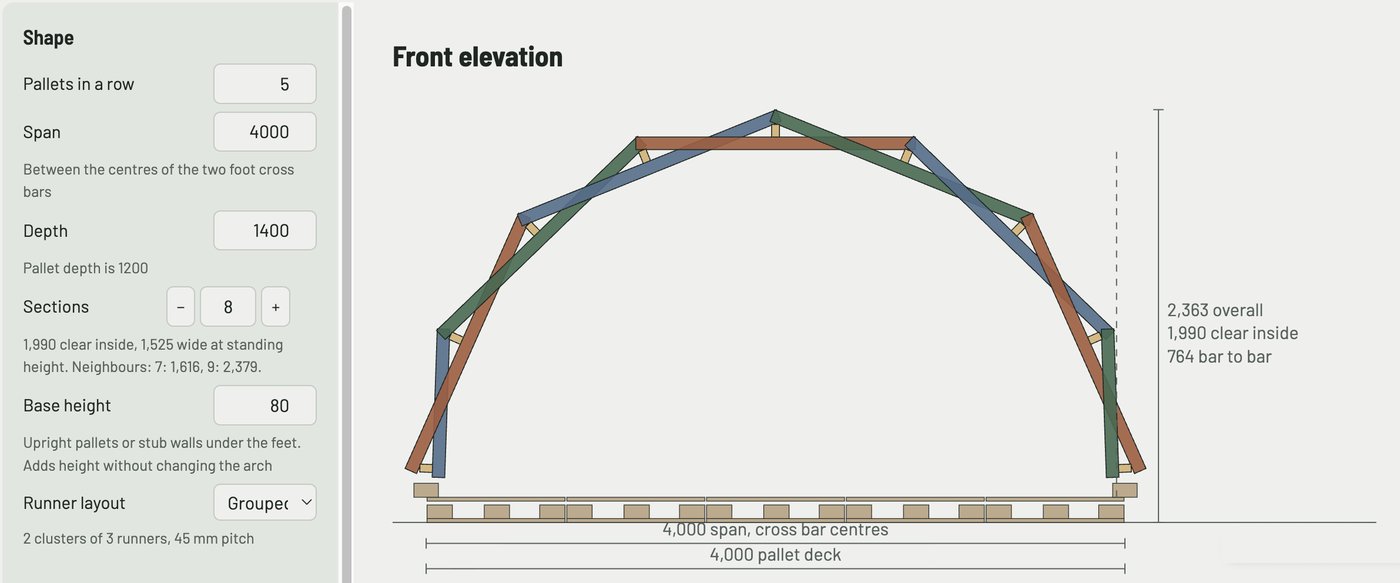
| Span | Between the centres of the two foot cross bars | 5,000 mm |
| Depth | Front to back | 1,400 mm |
| Sections | Bars per side of the arch | 8 |
| Bars | Cryptomeria strips, set on edge | 45 × 72 mm |
| Runners | Notched under each end | 10 × 4 mm notch |
| Deck | Euro pallets in a row | 5 |
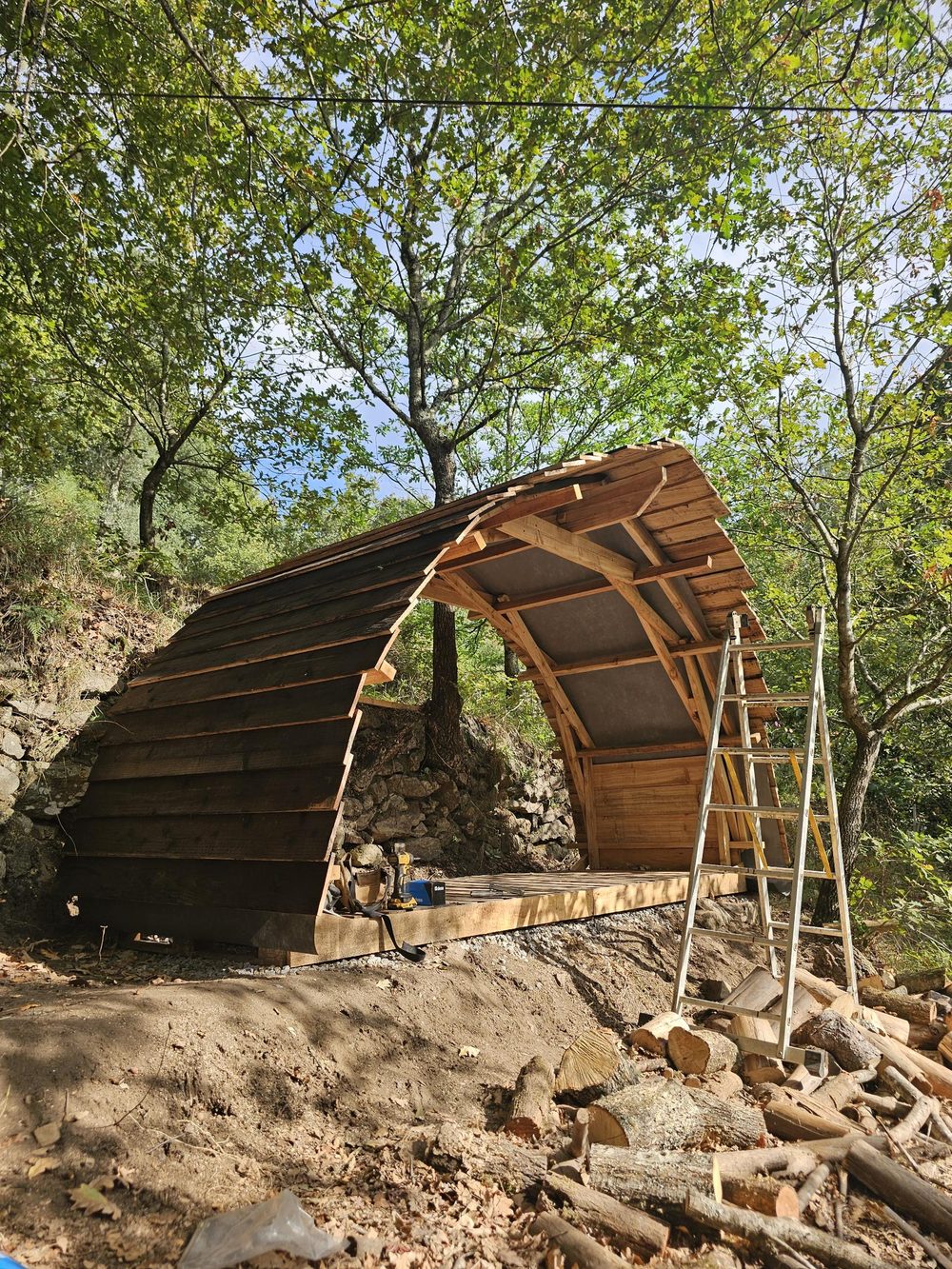
The arch tool is open source. Set your own pallets, span, depth and timber, and it gives you a 3D model, the part drawings, a cut list and a printable build sheet. The defaults are the shed we built.
It calculates geometry only. Check the structure separately before you build.
Art and objects
a fire that listens
Hand-sketched, laser-cut wooden lamps, now growing into programmable fire lanterns that respond to music and can join the land's fire watch.
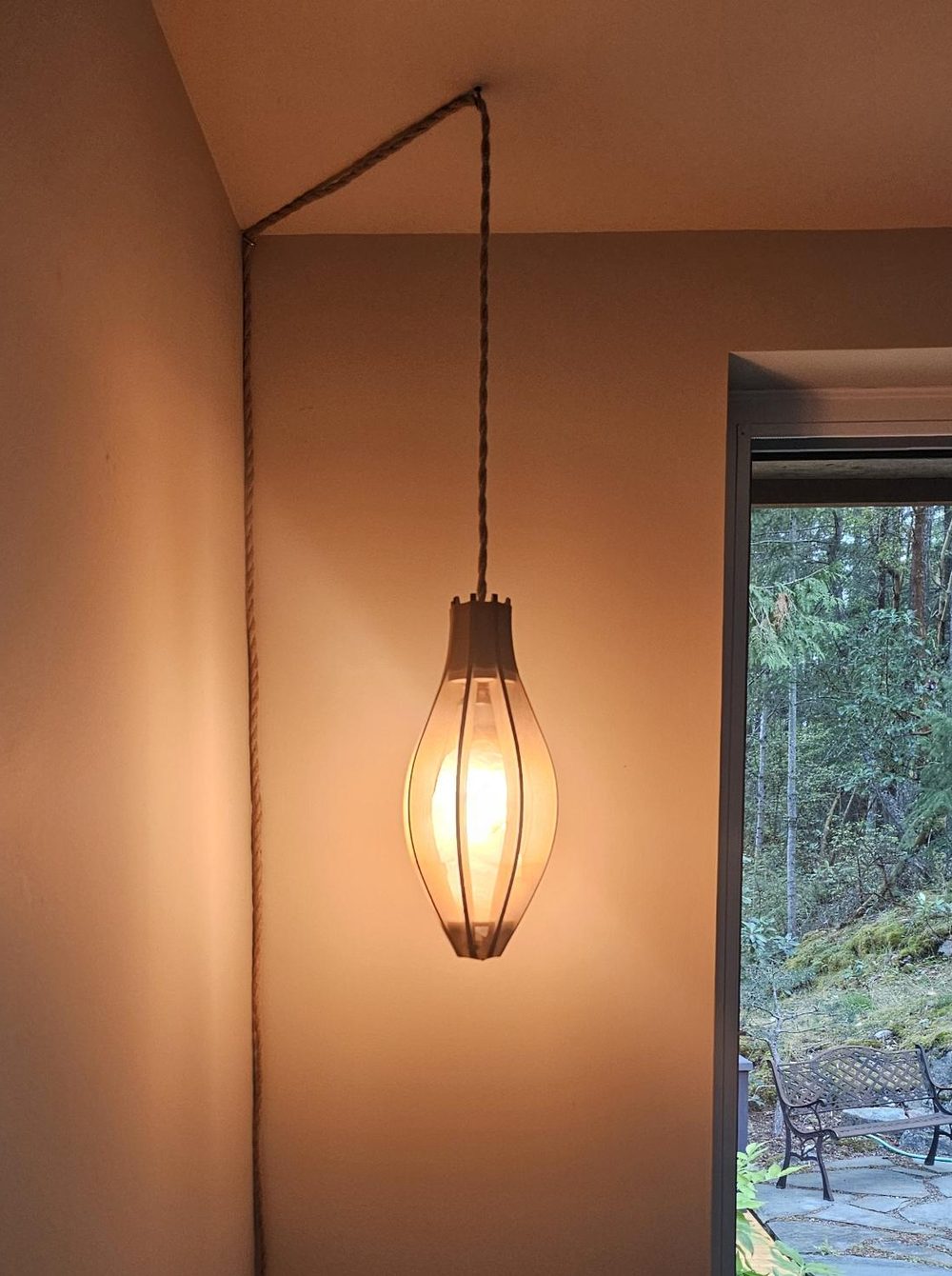
Seventeen wooden lamps were made in 2026. Each began as a hand sketch, was modelled in Rhino, laser cut from 5 mm plywood, then assembled with half-lap joints and wired by hand.
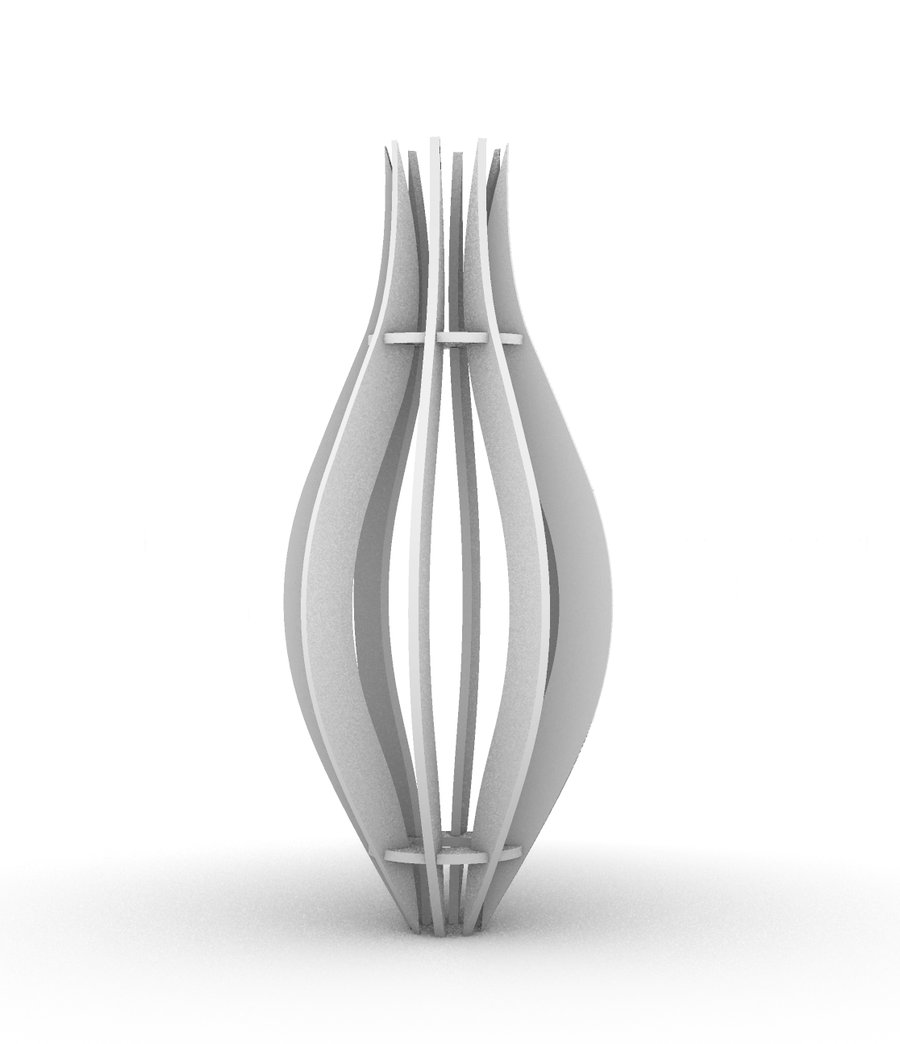
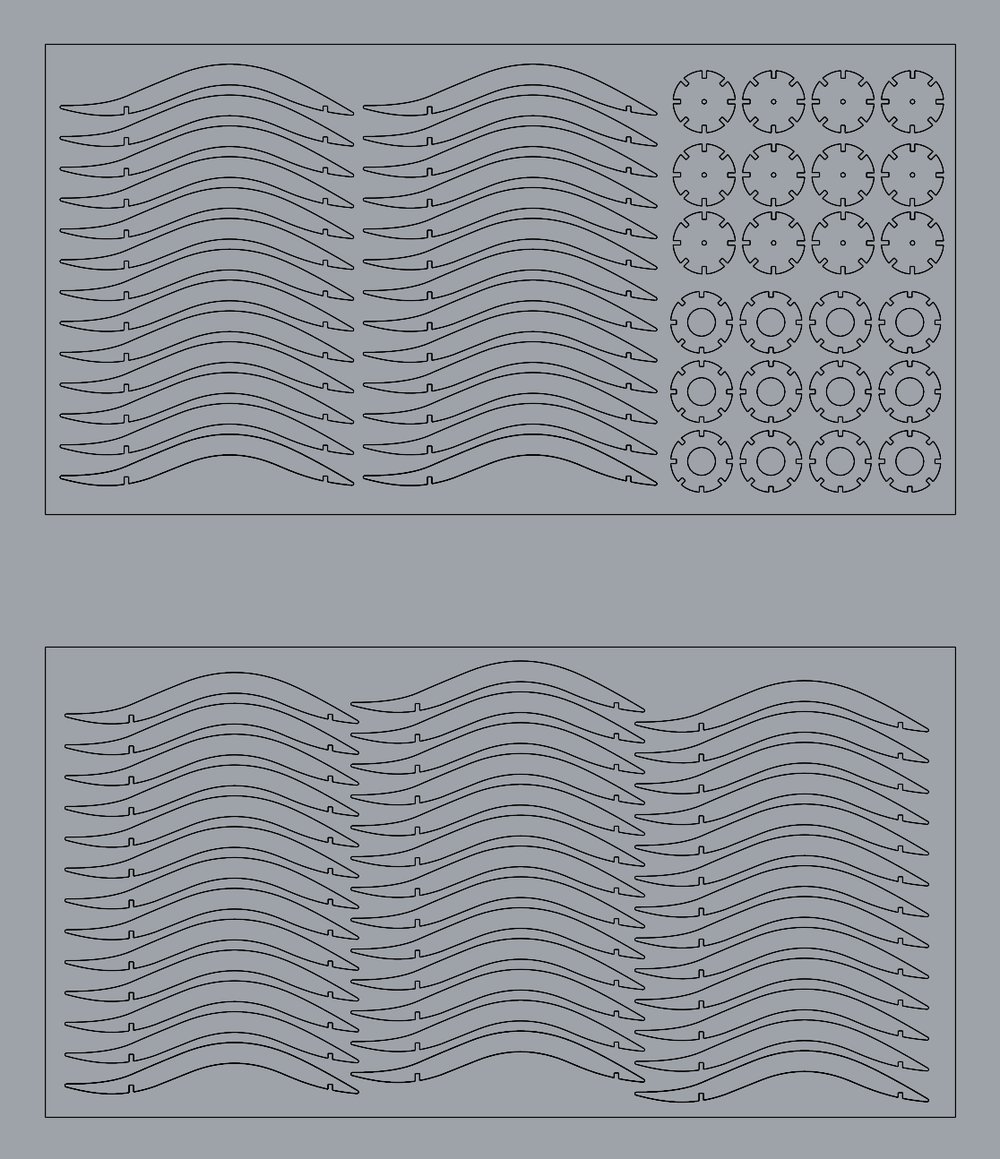
With Anca, the lamp is becoming an instrument. Inside, 266 addressable LEDs run physical simulations of fire, and the lantern can switch between them: a tungsten fire, a copper fire, and others.
A microphone lets the flame respond to music. A button and a knob on the lamp change the fire by hand, and an ESP32 lets it be programmed over Wi-Fi. Lanterns can be daisy-chained, and they can join Vigia, the land's fire watch, as one more way to raise an alert.
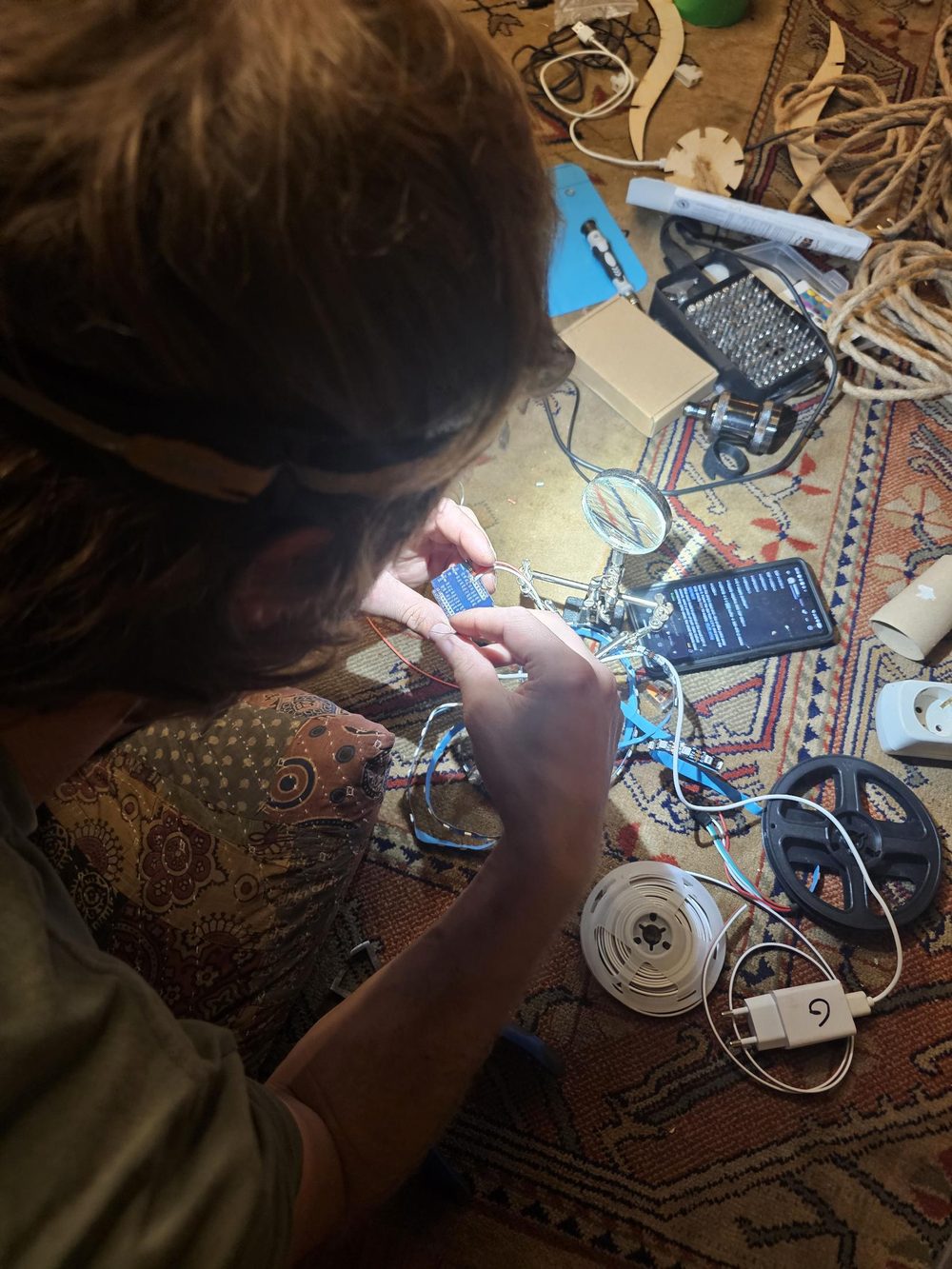
The lamp is designed and made by Eska. The lantern's mechatronics, from the electronics to the fire simulations, are by Anca.